Showing posts with label Filters. Show all posts

Tuesday

Air Filters – Tuned Up Car Performance

Air filters, as far as automobiles are concerned, are used to prevents contaminants and particulates from entering the engine. Lack of an air filter or a bad one could cause in premature wear and tear as well as oil contamination, lowering engine performance and fuel efficiency greatly. Since the quality of air is important in internal combustion engines, air filters are vital in keeping the performance of any automotive vehicle.

Prior to the 1960s, oil bath filters were the industry standard for air filter application. It consist of a round bowl filled with oil and a round insert containing fiber, foam and other coarse materials. The idea is to make air flow go through a maze with large particles being unable to reach the engine due to the loss of momentum and fall into the oil, and smaller particles to get caught by the materials contained inside the round insert. While the setup actually works, maintenance is often messy and inconvenient, which led to the phasing out of the application, save for off road vehicles and engines. Other problems faced by oil bath filters is the increase in exhaust emissions, as well as the relative size needed for the device to be actually effective.
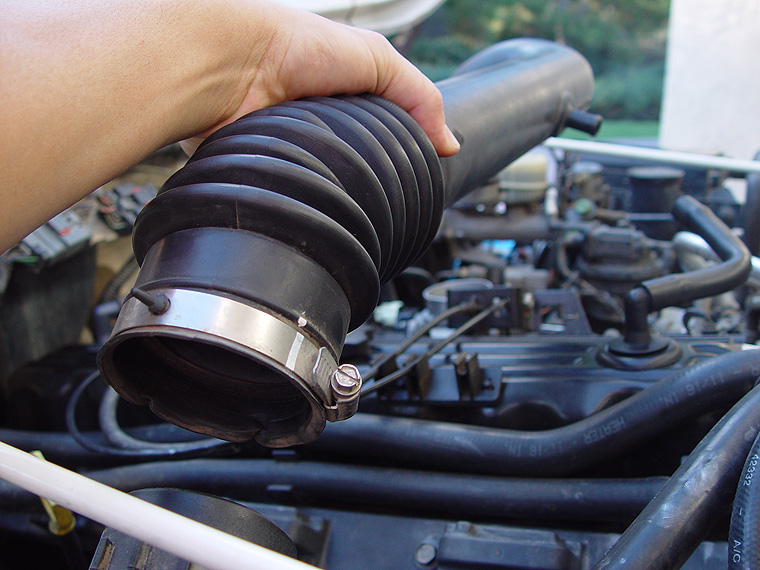
airfilter1234
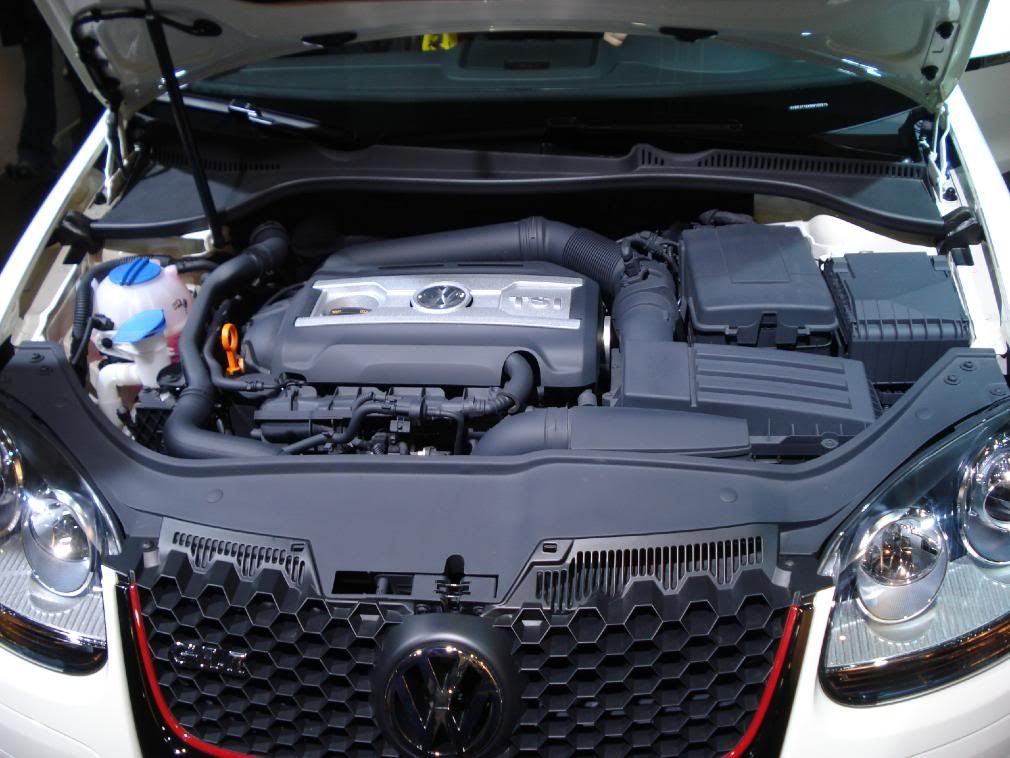
With the advent of fuel-injected engines, most cars use pleated paper filters shaped as a flat panel. Cars that still use carburetors or throttle body fuel injection configurations use a cylinder-shaped air filter, placed on top of the carburetor or throttle body and covered in either plastic or metal to regulate air temperature.

Pleated paper filters, are usually the stock air filter for most cars and eventually replaced oil bath setups. Of course, the misconception is that the paper in this case isn’t actually the same as the writing medium or material for books used. While cost-effective, efficient and easy to service, pleated paper filters will eventually need replacement, as air flow will be restricted once it gets excessively dirty.

Given the limitations of paper air filters, certain companies and tuner enthusiasts have looked to a more potent material or application in air filtration and cleaning. The aftermarket scene has many brands and companies that provide adequate alternatives, but also upgrades to stock filters. Some brands like True Flow air filters specialize in producing performance air filters and other True Flow performance parts, like their air intake systems, which are usually connected to air filtration.

Monday

Pumping Fuel Into The Engine - VW

Volkswagen thrives on its class, simplicity, and economy. These attributes are reflected on its vehicle designs. For example, basic VW automotive architecture involves having the fuel tank located in a car's opposite end off the engine. Because of this distance, a specially-designed, yet fundamentally-constructed VW fuel pump is needed to draw the gas toward the engine. There are two kinds of VW fuel pumps: the mechanical fuel pump, used in carburetor-run older VW models like Brasilia and Combi, and the electric fuel pump, used in the more recent, electronically fuel injected (EFI) cars.

Electric fuel pumps, the ones used by VW today, are almost always located inside the gas tank. This helps prevent vapor lock and keeps the fuel pump to a low and controlled temperature. The VW fuel pump is a turbine type hydraulic unit directly linked to a permanent magnet motor. This motor uses the fuel as its lubricant and coolant. Electric fuel pumps are used in EFI engines because they can produce high pressures needed for proper fuel management. An electric VW fuel pump is typically capable of putting out about 90 pounds per square inch (psi) of fuel pressure. A check valve is included in the fuel outlet to hold pressure when the pump is not running. Another valve, the pressure limiter, is located at the pressure side of the fuel pump housing, with a return passage to the fuel inlet side to keep fuel pressure within the prescribed specifications.
As the rotor disc rotates, the rollers are pressed outwards by centrifugal force and act as a circulating seal. The circulating rollers, in turn, creates a pumping action drawing in fuel at the inlet port and forcing the fuel through the outlet port and into the fuel system. When the pump is shut off, the check valve in the fuel outlet closes, therefore prohibiting the fuel from returning to the fuel tank through the fuel pump. The check valve therefore maintains pressure in the fuel lines called the "rest pressure." Maximum fuel pump pressure depends on the calibration of the pressure limiter. In a clogged fuel filter, for example, the fuel pump pressure exceeds a preset limit, resulting to a by-pass opening to the fuel inlet side of the pump by the pressure limiter.
Fuel pump failure is not uncommon, particularly in cars with electronic fuel injection. Usually, when a fuel pump fails, a car will simply sputter and die, and will not restart. Essentially, a car with fuel pump failure will act like it is out of gas, even when there is gas in the tank. Fuel pump failure can be verified by checking the fuel delivery end of the system -- if no fuel is being delivered to the engine, the fuel pump has most likely failed.
Replacing an electronic VW fuel pump can be really tricky. The fuel pump is usually mounted along with the fuel tank sending unit. Care must be taken when removing the pump/sender assembly so as not to damage the sender unit. Some vehicles have an access panel to get to the fuel pump without having to drop the tank. VW generally does have these panels. Some cars require a special tool to disconnect the fuel lines. Other cars have an access panel in the interior of the car that can be removed to reach the fuel pump. Still other vehicles require the fuel tank to be siphoned and removed, or dropped, before the fuel pump can be accessed. The latter type of car usually makes for the most laborious job of replacing a fuel pump. Arduous the changing of a fuel pump may be, but with this lies the car's efficient fuel intake.

Friday

Acura Air Filter

It's a given already: car maintenance shouldn't be taken for granted. After all, the performance of a car suffers greatly when it fails to receive regular car maintenance. And when it comes to maintenance issues, one component that people should learn to consider are air filters. As a part of the automotive assembly, air filters allow cleaner air to pass through the engine. Since engines require both air and fuel to run, air filters are put in place to ensure that the air is rid of impurities that may cause harmful effects if they enter the engine system. This process serves to ensure higher road performance for cars.


Basically, an Acura Air Filter is a device that removes contaminants, often solid particles such as dust, pollen, mold, and possibly, bacteria, from the air in the engine. Since air quality is important in ensuring that the automotive system runs smoothly, without any signs of trouble, the need to adapt high-performing air filters the likes of Acura Air Filters cannot be stressed enough. Air filters make it possible for the flow of clean air in the engine system to continue. This, in turn, guarantees that one's car will run with greater power and speed on the road.
Of course, Acura air filters, though they may exhibit better features than most, still require regular maintenance to ensure optimum performance at all times. One way to improve the quality of an Acura Air Filter is to clean it. One must accomplish this task regularly. Holding the filter up to a clear, available light source or thumbing through the accordion-like flaps, will give the driver an idea on how dirty the air filter apparently is. The Acura Air Filter is also one of the things to monitor when the car is noticeably running low on power or if the engine is burning more fuel than usual.
Another good thing about these high-standard Acura Air Filters is the fact that the materials involved in their construction have made it possible for these parts to require minimal fuss when cleaning. So it's certain to be easy and simple to accomplish.

Check and Change Air Filter

You car's air filter is very important since it maintains some parts of your car system clean and free of dirt. If your air filter doesn't work properly and dirt enters your car this might make it go through different problems, and therefore it is important that you check the filter and change it when necessary. Your mechanic can do it for you although it is very easy and you could do it yourself as well.


It is recommended that you change your car's air filter once a year or every 15.000 miles if you live in an averagely dusty area. But, if you can check it once in a while and replace it as soon as it needs it this would be much better. Checking it is a very easy thing to do and replace it is not complicated once you learn how to do it.

If you wish to check your car's air filter yourself and in an easy way, you can do so by using a light from inside pointing outside and check how bright it looks through it. If you see the light clearly, then your air filter is still good, but if you can't see much of the light then it indicates the filter needs to be changed.

Newer cars have different air filters than older ones. If your car is rather new, its air filter is probably rectangular and you might find it located under the hood, near the radiator area or the fender wells. In order to change it, you must open it and take the actual air filter from it, replacing it by the new and then closing it again.

If your car is older, then the air filter will probably be of a big round shape and located near the engine area. It might probably be screwed, and all you might need to do is to unscrew the cover, let the air filter come out, and place the new one instead of it. You must pay attention in case it has any other attachment mechanisms such as clips which you would need to take off as well.

Tuesday

Motor Vehicle Passenger Compartment Air Cleaner

1. An air filtration device for use in vehicles with air outlet located in the dashboard fascia of the passenger compartment of a motor vehicle, composed of: an air filter that takes air input and output sides, said the filter more having one or more bezels located in that side air entry, so that said bezels adjoin said air inlet side of the air filter for that dashboard fascia around the outer perimeter of the aerial vehicle exit, and Enclosing a means of holding such bezels ntimately against that the fascia board, said attaching means to be accessible from serviceably inside the vehicle passenger compartment; which said one or more bezels are composed of resistant material.
2. The air filtration device according to claim 1, wherein said resistant material is at least 1 mm thick.
3. The air filtration device according to claim 2, where it says resilient material is chosen from the group of polymer foam, sponge, synthetic rubber and elastomer.
4. The air filtration device according to claim 2, where it says resilient material includes substantially contoured surfaces matches how that vehicle exhaust air.
5. The air filtration device according to claim 2, where it says resilient material includes one or more openings that said openings direct airflow to the vehicle exhaust air to air input side says that filter.


6. The air filtration device according to claim 1, wherein said air filter is composed of materials chosen from the group's non-woven fiber, either loaded or unloaded with static electricity, woven fiber, open cell foam, activated charcoal or charcoal, activated alumina impregnated with KMnO4 (potassium permanganate), and zeolite.
7. The air filtration device according to claim 1, wherein said air filter is folded.
8. An external study of air filtration device for use in vehicles with air outlet have lamas, located on the dashboard of the fascia passengers compartment of a motor vehicle, including the following:
an air filter that has air flow of air parties, said the filter more having one or more resistant bezels located in that side air entry, so resistant bezels said that adjoin said air inlet side of the air filter to the fascia board said the outside around the perimeter of that Vehicle exhaust air, and
Enclosing a means of holding such bezels intimately against that the fascia board, said attaching means to be accessible from serviceably inside the vehicle passenger compartment;
where Sai enclosing means is an elongated Louvara to grip the device having:
one or more terminal portion that excels in that vehicle exhaust air and engages in one or more lamas, causing the lamas to be held substantially open;


a scion of extending the term, through the air side entrance of the air filter, through the air filter, and said through air outlet side air filter, and An adjustment of nut located on the output side air that is dedicated to this shank, said that air-filtering device and said resistant bezels are forced intimately against fascia said dashboard barring such adjuster nut in connection with that rod.
9. An air filtration claim 8, where it says portion terminal Louvar said device is to understand-shaped hook.
10. An air filtration claim 8, where it says portion terminal Louvar-grabbing, said the device is twofold.
11. An air filtration device according to claim 8, where it says mango adjuster nut and screw are.
12. An air filtration device according to claim 8, where a plurality the teeth are removed to the surface cane, said, and said that is just nut It consists of a ratchet that is dedicated lockably one of the plurality of teeth to prevent the withdrawal of that handle such an adjustment nut.
13. An air filtration device according to claim 11, which states ratchet composed of more than one deputy or lever arm attached to a motion of said lever arm deactivates said ratchet away from the teeth.

ITG Air Filters

About ITG air filters The best air filters ever made, period.
ITG the current range is the product of nearly 19 years of constant effort for the best designs, made from the finest materials with improved methods of manufacture. Whether you're racing, assembly, cruise or go shopping, you can be sure that nobody makes a better filter.
Best performance tests for any product has always been the motor sports, so best teams WRC/F2 Rally Super Touring Car and Formula 1, ITG make his first election in air filtration.
ITG why?
The technology 'reticulated foam polyester' ITG allows greater flexibility in the design and implementation of paper or gauze filters style. ITG was probably the first company to manufacture a truly durable, high-performance foam-based production air filter.
Why is the foam? Because, compared with filter paper or other technologies, reticulated foam polyester achieves optimum performance against three key criteria:
1. Maximum air flow - filters ability to allow air to pass through without causing a big drop in pressure.
2. Cleaning efficiency - the ability of a filter to stop at a high percentage of dust carried by air, while feeding the engine clean air.
3. The dust burden of tolerance - the ability to absorb a large amount of dust, without reducing the ability of airflow.
With the only Tri-foam system, which uses various thicknesses of coarser or thin foam, these factors may vary for different applications.
Tri-foam gives us the flexibility to produce air filters to exact specifications and, where high flow rates are possible, we can adapt filters to stop even the slightest trace of dust.
What's more, because we use the latest technologies for adhesive bond layers of foam, ITG filter assemblies are completely resistant to water, smoke, oils and fuels - including exotic beer used in racing.

By using different thicknesses finer or coarser foams, ITG designers can vary the above factors to achieve optimal for each application. It has been shown that small amounts of dust particles smaller than 10 microns have a negligible impact on engine wear, so that the materials used in our range of filters have been carefully selected to give a good airflow , Excellent load tolerance, and high efficiency while the extraction of avoiding unnecessary. When the dust high flows are possible, tailors ITG filters to stop even the slightest dust.
In addition, construction of ITG filter significantly reduces noise, when compared with competing designs. Although competition of any type of filter will result in an increase of more than noise original equipment, a filter ITG probably give more power for longer, while others quieter than other types of filter competition.

Change Car Air Filters

It may seem silly, but changing your car filters on a regular basis can have a significant impact on engine life and performance.
Here in Los Angeles, where we have our editorial offices, the premises have a saying: "Never breathe air you can not see." While the editors of Edmunds.com, a daily walk through this slump of particulates and CO2 emissions in the suction and nitrous oxide, our cars have the advantage of air filtration.

There is something wrong with this picture? Should we will not be the most masks on their faces and a program of regular maintenance to change the filter?
But nooooo. We are too busy driving cars of the press, taking notes, shooting pictures, opening doors, hoods hack, racing through the feet, agreeing to come here-looking marriageable young actresses that I think actually own these vehicles, taking more notes, running to the car wash, dashing across town in late press conference, attending racing school ... aaargh!
And that's not the middle of it. As such water. We are actually supposed to drink these things? THE tap water has the consistency of Quaker State; looks like scum swamp. Where is our water filter? Can not we have a cup of nature without the best things floating in it? After all, our cars have fuel filters, have a system to eliminate noxious particles. Where's ours?
Well, as you can see, anything that takes in fluids or air this means, whether man or machine, there should be a way of separating the good from the bad, taking only the benefits that the mechanism and leaving the rest behind.
Our cars. They are called filters - namely, air filters and fuel filters. True, which require regular care, however, this is one of the simplest and least expensive - and most important - maintenance procedures you can perform to his car.
What we'd like to do in this month's column How is that you walk through a filter change base. It is not going to take time, saves money, and sends his car on the road fresh and renewed. A clogged air filter or fuel can cause poor performance, cost to the fuel pump, and shorten engine life. This simple procedure against the guards.
How often should you do this? A good rule of thumb is once or twice a year, or about once every 12000 miles.
Change the air filter
At least, learn to change their own air filter. It's quick and easy and saves money.
How so? Well, I think: When was the last time they went to Quick Lube-N-Tune took place on mechanical and hit him with "Hey Bud, you need a new air filter." After you wink and see how it adds to the bill. How much? $ 7.99? $ 9.99? $ 12.99? Heck, even we have seen $ 14.99.
There is an old joke about the creation of the universe with the punch line: "Well, somebody had to pay retail." Maybe so. But not necessarily.
One of our jobs here at Edmunds.com is to empower you. Do not let them stick to you. Learn to say "no" - there is no law against it. Simply say, "I'm going through now," or "Thank you, I will see it," and go home after the oil change and carry out this procedure you - if, indeed, really needs to be done.
First, park your car in the shade and pop the hood. Prop up to what you do not hit in the head, and then let the engine cool for a few minutes.
While cooling, to be their tools. You will need very few for this procedure - you can probably do it with a butter knife. If by hand, however, seizing two medium-sized screwdrivers, one standard and one Phillips, and head back to the car.
The air filter is usually enclosed in a black plastic casing near the center of the top engine (sometimes, especially in large vehicles, were out on the side). Must be the largest metal can not see the assembly, the size of a breadbox. Encounter? Good. Now, open it.
How? Well, most of them are kept together by a pair of large metal clips on the side. Slide the butter knife or flat-headed screwdriver between the casing and the clip and pry the shell open. Sometimes you find that was held together with several long screws, in which case you'll have to unscrew to get into the filter. (Many of the older cars used a bottle of cleaner air held within a circular black. It's like a giant donut that is at the top direct-center engine.)
Anyway, crack open. You will find the air filter inside. It is usually bright yellow or orange or red, the better to see the collection of dirt.
Pull it out. It is generally flat, elongated, usually about a foot long and six inches wide by two inches high. It is made of strands of paper with rubber edges along the bottom to seal against the deck.
Now, let's check for cleaning. Keep it up. Bend back, so the role of mountain ranges as the filter flutter the pages of a book, and look inside the cracks. Do you see a lot of accumulated dirt and grime? Now will be held at arms length and look straight ahead. It is the dirty orange or yellow paper mainly in the center? If so, we will replace it. Not much - just the replacement costs about five dollars. Remember that $ 14.99 price Quik-Lube place? This is where you get even.
Close the case. Then put the old air filter in a plastic bag from the supermarket. You will want to bring with you to compare the old with new and sure to get the right replacement, so throw in the car and go cleaning.
Incidentally, it's okay to drive a car short distances without an air filter (something you can not do and who lacks a filter fuel).
This is what you need to buy at the store auto parts:
* New air filter * New fuel filter * The new board (s) for the fuel filter - which usually come with, but ask
When you return, go ahead and install the new air filter. Seal and until it has finished.
Replacing the fuel filter
This is a bit more problematic procedure, since the pursuit of thing can be half the battle. It is usually located near the university engine near the air filter, although sometimes with more modern cars, is actually incorporated into the fuel tank and is a job best suited to your mechanic.
First, if the value of his life, the extinction of any material smoking while doing this procedure.
Secondly, for better access, remove any oversized, plastic coverings at the top of the engine. They usually come with a wide flat head.
Now looking for the fuel line, coming from the rear of the car. It is more or less the same diameter as a finger-thick, and be soft and pliant, not a tree Carbide. It enters the fuel filter on the back of the vehicle.
Encounter? Well, now grab a couple of pencils # 2. You also need several different sizes of screwdrivers, both Phillips and flat head, and a small set of ratchet.
This is what we are going to do. When you work the line fuel filter free, you're going to jam the pen in the free end to keep gasoline from spreading throughout the engine (and yourself).
The line will usually be guaranteed to fuel the fuel filter with a little clip. The work is complemented with a screwdriver - usually a Phillips - and to stop difference with the stylus. (Sometimes you need an object larger diameter than a pencil. You need to be resourced here, we do not know what you have lying around in his junk drawer at home. One of the first pencils first grade is perfect .)
After you've connected the fuel line, you can set to work removing the fuel filter. It is typically guaranteed for the engine with a pair of small screws. Find the right size socket and remove the filter. It will have a hose coming from the other end (this goes for the engine) in order to eliminate this the same way as they did others, and connect with the rest of pencil.
Compare the new filter with the filter of age, and make sure the position in the same way, so that the fuel is flowing smoothly. Sometimes there is an arrow in the filter showing you that the direction of the flows of fuel.
Put the assembly together with the inverse of how you understand separation. Before doing so, however, take a quick look at the new filter.
You note that there are two metal (or plastic) comes from wells where the filter attach hoses. They have little nubs or ridges around the edges. Be sure to slide the engomado lines in the filter as in the past nubs as you can get.
Also, pay special attention to the clamps on each end of the filter. Position among nubs and the body of the filter. Then get snugged them good and tight (but not so tight as to strip the screw), to avoid leaks.
One last thing. If hoses are increasingly frayed and fragile, make a mental note to buy some new hoses next time you change the filter. If you're really bad, replace at this time.

K&N Million - Mile Air Filter

K & N makes the dropout replacing air filters that can be cleaned rather than replaced. K & N claims in the re-usable air filter saves money and waste disposal, and that their filters are less likely to restricting the air as it dirty. (Restricted airflow causes a reduction in engine power and fuel economy.) Retail prices range from $ 35 to $ 80 + depending on the application.
How does the K & N filter?

Air Filters 101
Engines produce power of provoking a mixture of fuel and air. The air filter's job is to filter out particles of dirt while allowing a free flow of air to the engine can "breathe". A filter clogged with dirt will cause loss of power and fuel economy.
Most air filters used his role as a filter medium. Most cars require the filter to be checked or changed every 10000 to 20000 miles; when the filter is dirty, is thrown away and replaced.
How is K & N different?
K & N filters use an oiled cotton filter medium. K & N claims that its filters not only allows the flow of fresh air when clean, but they can absorb dirt without limitation as filter papers. When the filter gets dirty, not pull away, clean and re-oil. K & N estimates that the cleaning interval is about 50000 miles (longer for less dust). The filter is served with a K & N cleaning kit ($ 9 to $ 12 Compare Prices retail), which is good for 5 to 10 uses. K & N said its filter will last for the lifetime of the vehicle, with its filters and covers 10 years and millions of miles warranty.
Benefits of K & N filter
Benefits for the environment
Paper air filters can not be recycled; you have to throw the whole thing away. The K & N filter itself lasts the life of the car, and cleaning kit used cartons and plastic bottles that can be recycled.
Cost benefits
The cost savings will depend on the application. I tried K & N filter in our 1996 Honda Accord. The retail price for K & N filter is approximately $ 43. (My test sample was provided free of charge by K & N) filter papers ranging from $ 19 to $ 31. Honda recommends a change to filter 15000 miles, so for a do-it-yourself like me, K & N filter and a cleaning kit will take care of itself after two changes, or about two years. For people who have their car serviced by the dealership, the installation of a K & N could pay for itself in a single shift.
In the real world benefits
This is the reaility: I am not as careful as I should be on changing my cars' air filters. By the time I get around it, is the filter is usually clogged with dirt - and that means more to me to pump gas. The K & N longer service intervals means that you can blithely ignore that, without harmful effects.
Other issues with the K & N filter How well does it filter? Several readers have responded with concern for the K & W's ability to effectively filter out dirt air compared to filter papers. After all, protecting the engine is why engines have an air filter to begin. K & N insists that its filters are rigorously tested to meet standards filtration OEMs.
The expert opinion: Not an issue
I discussed the issue with the owner of an engine rebuilding shop reputation. In his experience, engines that have suffered from premature wear are those in which the filters are routinely ignored. He saw no significant difference in wear on the engines that filters are cleaned or changed regularly, regardless of their type. (Running personally K & N filters in their own cars.)
Does the K & N increased engine power?
Many enthusiasts use K & N filters because their increased airflow increases power, especially in certain applications. If replacing a clogged air filter certainly see the difference. My wife Robin and I did not see a significant increase in power, what he says, is not expected to - K & N sells a kit of special admission for owners of Understanding like us who want more power. (We will be a test in the near future.)
Conclusions What I like about the K & N filter:
* Easy installation - same as a paper air filter * A task less maintenance to worry about * Benefits for the environment - less waste produced * Potential for better long-term fuel economy

Sunday

Aftermarket Air Filter Parts


When purchasing a new vehicle you will get what is called a factory installed air filter. And when you have your oil changed at a quick lube, they will ask if you want it replaced. Usually, they will replace it with a factory equivalent quality filter that will most likely need to be replaced about every other oil change or so. There is another option regarding air filters: you could install a performance air filter that is better for the environment and provides better power and less fuel consumption. The reason a performance air filter for your truck, van, SUV, or car can provide these results is because of the materials used when manufacturing the filter.
Performance air filters are reusable but need to be cleaned and treated with the factory supplied cleaning products.

The filter media is a cotton material that is washable and built to last for thousands of miles thus eliminating the disposal of conventional paper media filters. Because you are using a better filter media, your engine can breath more easily and allow more air-flow into the engine which will produce more horsepower and better acceleration. Because your engine is not working as hard due to the better air/fuel mixture, you will see an increase in fuel mileage. The other issue when looking at these types of performance air filters is price, you will pay about twice as much for these filters but they will last you longer - about 5 times longer and saving the replacement cost of the more disposable type filters.
There are many types of performance air filters on the market so make sure you look for a brand name performance filter so that you are sure to get a good quality part and not a knock-off or cheap imitation. Keeping your car in top running condition is not only good for your bank account, it will also help the environment. Be sure to do your homework before purchasing and make sure you read the warranty. Most of the guarantees on performance parts are very good.

Saturday

Pontiac Fuel Filters


Due to the continuous increase in fuel or gas rates, you need to make all the necessary adjustments so your vehicle reaches its peak fuel efficiency status. With the help of cost effective performance enhancers, you can upgrade your vehicle’s critical factory settings for combustion efficiency which often restricts the adjustments allowed to unleash your engine’s full potential of generating optimum power and torque. Actually, you can boost your engine’s overall yielded output when you make sure that your Pontiac fuel filter is kept effective and efficient like new. Even as a simple engine maintenance component, the part could help promote greater fuel economy and cleaner fuel burn. To do that, premium fuel filters make use of their manufacturer’s specially impregnated filtering media so it could effectively trap the smallest of particles which may have been carried from the fuel reservoir. Prior to launching the metered amounts for fluid to your engine’s fuel injection systems, the part clears out the fluid all forms of contaminants it could have carried through the combustion chambers. While it constantly collects all forms of impurities which could potentially cause combustion deficiencies or brew damage inside the combustion cylinders, stock fuel filters will eventually need replacement. For preventive maintenance, you need to keep regular intervals for fuel filter replacements to continually enjoy excellent fuel efficiency and performance gains.
Modern engine assemblies require high flow Pontiac fuel filter as its practical applications could greatly contribute to achieving your set engine performance goals. As it complements tight tolerance engine fuel systems with its high-flow and outstanding filtering features, precision flow of metered amounts of fuel is better maintained. When you are accustomed to keeping regular schedules of engine servicing, you can effectively keep track of the part’s actual working state. By periodically checking the part for contamination or debris build-up, you can precisely estimate or determine the best time for you to have it replaced. Overextending the part’s service life is poor economy as it puts your engine under undue pressure in struggling to maintain engine system precision while sustaining efficient combustion processes. It could even wear out your stock fuel pumps and contaminate fuel injectors. Remember that an already contaminated filter does more harm than good when sustaining smooth engine operations for it may cause severe engine damages due to imprecision. While direct-fit and OEM quality Pontiac fuel filter replacements are conveniently available for specific year and model of applications, finding equally dependable replacements will be easier and more convenient.
Proper attention to Pontiac fuel filter maintenance is essential to continually enjoying its great valued service. While some fuel filter applications can be re-used and cleaned many times, it tends to clog with neglect. This results to greater fuel flow restrictions and poor drivability due to appreciable drop on fuel filtering efficiency levels which could lead to more catastrophic fuel system problems. You do not need to have special knowledge or skills to determine when is the best time to have your stock filters replaced. By sticking to the manufacturer’s application and maintenance specifications and recommended intervals for filter replacement, you can optimize the gains enjoyed when you keep the part in top notch working conditions. When you decide to have your Pontiac fuel filter replaced, you can consult a qualified service technician or a good repair and service manual to ensure great filter maintenance or servicing results.

K&N Cold Air Intakes vs. AEM Cold Air Intakes

Sure, comparisons are a nice, dignified way to pit two things against each other to find a measured victor in a gentlemanly fashion. But, that’s no way to decide which performance parts are best for your ride. In this edition, we pit K&N Cold Air Intakes versus AEM Cold Air Intakes in a gritty steel cage match. Read on for the blow-by-blow account of the clash of the induction titans.


Welcome to the air intake battle royale, where we force K&N Intakes and AEM Intakes to fight to the death…or at least until we have a clear winner holding the title of “Best intake for your auto.” At face value, there are some similarities between these two fighters—both pack incredible pipes with the testing and training an intake needs to be a champion. We suspect the subtle differences are where the fight will be won; expect neither to be knocked out but rather jabbed into a bloody, stumbling, slurred submission.
In the black, red and orange corner we have K&N, the taller, heavier, more established fighter of the two. Sure, they’ve been slugging it out with other contenders for more than 30 years, much like an aged and grizzled fighter like Evander Holyfield. But, unlike Holyfield, K&N is sharper than ever, still packs quite a wallop, has their ears intact, and nobody is begging them to quit for their own good. K&N’s advantage comes from not only being the undisputed champion intake, but also from being the brand that practically invented the sport.
AEM struts in as the challenger; a slimmer, faster, younger fighter sporting flashy red and yellow trunks. Buoyed by newer technology and plenty of support in the sport compact realm, AEM’s plan is to take the lumbering K&N with speed, quickness and quality punches. This challenger firmly believes they’re ushering in a new era of intake performance, design and maintenance.


The bell rings, and the two intake brands dance toward each other. They come together, and K&N lands a nice two-punch combination to the nose and jaw, thanks to their intake tubes. Their crosslink material tubes, available on the vaunted FIPK 57 Series and 63 Series Air Charger intakes, keep the incoming volumes of air much cooler than the metal tubes used with every AEM. Not to mention the price—crosslink plastic tubing helps a kit cost less. But, AEM relies on its smooth footwork to land a stinging gut shot, thanks to the dressy look of their pipes, which are slightly nicer in terms of engine compartment looks even when pitted against K&N’s 69 and 77 Series.
AEM also rallies to run K&N into the corner with Brute Force, their brawny truck and SUV intake that’s gaining street cred by the minute. But, K&N escapes damage by striking AEM with their 69 series—an unlikely point on the card for the veteran. Though AEM has the sport compact high ground, most of the 69 Series is able to be configured as a short ram intake or a cold air intake drawing from the wheel well. Then K&N drills AEM in the eye with filter technology, setting off suffocating swelling. K&N’s cotton-gauze with oil filtration system uses its time-tested formula and 1,000,000-mile warranty to land a big blow over AEM’s struggling bid to equal cotton-gauze performance with an oil-less filter.
Round and round they go, trading jabs and the occasional slug that re-engages the crowd to this clash of now-tiring titans. As the 12th and final round passes with many a fist thrown but few landed, the judges must go to the scorecard. Though AEM takes rounds judged on compact performance and looks under the hood, K&N wins the battle by decision with an extra 4hp on the dyno for the F-150 with a 5.4L V8, which happened to be the judges’ trucks. The cooler crosslink tube (which also costs less) helped put K&N over the top of AEM here, making it the current undisputed belt holder for intake performance. But, AEM will likely return soon with some new moves in its quest for the title.

Way To Change Oil

Wow, you are actually going to change your oil all on your own.That is great!You will soon learn that it is so much easier than those mechanics would like you to know.
They would rather you bring it to them on a regular basis so they can charge you for all the other maintenance services they provide.Which you can do yourself as well.Read on and discover how to change oil yourself.
Since you have decided to do this yourself, you need 5 quarts of new oil, use a name brand, not the cheap stuff.You also need to purchase a very high quality oil filter, don't go with the cheaper ones.Also ask for an oil filter wrench or a metal strap wrench. You also need a container to catch the oil, one that will seal closed.
Ok!now you are ready to get to work.Make sure you are able to fit under your car.You might need to jack up the front some, best to have some supports.
Always have someone there in case of accidents.Before you climb under your car, remove the oil cap.Now to get under for the fun stuff.
You will want to place the oil tray under the oil plug.At the lowest point of the pan, you will see the plug, remove this.The oil will drain out into your tray, it will take a few min.
After you have drained the oil, replace the oil plug.Be sure not to screw it in too tight, this will strip it.Now you want to move your drain pan under the oil filter.Oil will leak as you pull the filter out.

Using your filter wrench, you will want to turn the oil filter counter clockwise.Once it is loose enough, remove it using your hands.As I said earlier, there will be some oil that will come out.
On your new filter, you will see a rubber gasket.Take some of your new oil and completely coat the gasket.This will keep it from sealing so tight that you won't be able to remove it next time.
Time to screw the new oil filter on using only your hands.Now you are ready to screw in the new oil filter.Turn it until it is tight.Now you can use your filter wrench to turn it another ? to ? turn to seal it.You are done under the car now.Time to fill up with your new oil.You are ready to put your new oil in.You should use the entire 5 quarts.
Put your cap on and then turn on your engine and let it run for about 5 minutes. Turn your car off and check your dip stick. Now you have discovered how to change oil all by yourself and have nice clean oil in there.With nice clean oil, you are ready to go.

Thursday

Is the Oil Change Due?

If you are looking for the quick and dirty answer, then it's the first of 3000 miles or 3 months. But on any given day, you can ask ten people and may get at least 2 different answers. The answer variation lead me to conduct an extensive, detailed research. The research answered explained yet another interesting question. Why would two identical cars experience engine failure at different odometer reading. One runs for 300,000 miles, while others fails before reaching 50,000.


The majority of vehicle manufacturers suggested that passenger car and light truck gasoline engines driven under normal conditions should get an oil change once a year or every 7,500 miles. I went on to find a description for normal driving conditions. One hundred college students were interviewed to determine the description of their own driving. You may stereotype college students driving as sever conditions, but three in four thought their driving is of normal condition, while answering yes to one of the following questions. Do you encounter frequent short trips during cold weather?Do you drive in city traffic (stop-and-go traffic)?Do you drive in dusty condition?Do you drive on the on the highway during hot weather?
If you answered yes to any of the questions, then you're driving is considered of severe condition. Some so called experts claim that the 3000 miles rule is a myth that oil companies came up with to increase their profits. This maybe true if you are buying a brand new car, and do not plan to keep it for an extended period of time. However, lets look at it from a different perspective. Frying oil. You can use the same oil in the pan for multiple uses. Some people use the same oil 10 times, and some others are not willing to use it more than 2 times.
However, you would notice the change in color, and the thickness of the oil over multiple uses. The same applies to car oil, the more miles you drive on it, blowby increases. This results in more unburned fuel into the crankcase, eventually diluting the oil. The cause a break down in the oil purity, which means more tear and wear on your engine, and an accelerated engine problems. The wear will result in loss of performance, lower fuel economy, increased emissions and oil consumption. Therefore, for maximum protection to your investment you should change the oil every 3,000 miles or three months.

Do I Need To Change My Oil Filter?

Car makers worry about their reputation. Well at least some of them do. But they also care about beating the competition by advertising for low maintenance cost. Those car manufacturers calculate the estimated annual maintenance cost based on changing the oil filer every other oil change, or 6000 to 15000 miles. This ultimately reduces the cost of the vehicle maintenance. On the other hand, oil filter manufacturers suggest that the filter is to be changed every oil change. Now, which word should you take for granted, neither.
I wanted to get a third opinion, so I interviewed many mechanics, and almost all agreed on the fact that the the every other oil change is a false economy. All mechanics highly recommended changing the oil filter every oil change. This was back up by their experience, and science.
today’s engines use a filtration process called "full-flow”. With this technology, all the oil that's goes from the reservoir to the engine passes through the filter first. This means that the primary defense line to the engine's crankshaft, and cam bearings is the oil filter. It's purpose is removing unwanted solid entrants to the system, such as dirt, carbon, and metal particles. These entrants can damage the bearing, journal and cylinder wall surfaces once they reach the engine. The filter absorbs and filtrates against abrasion and premature wear to the engine.
Over time, the filter accumulates dirt that has been trapped, until it reaches a point where it is possible for oil passage to be obstructed. The filter should be changed before it reaches a point where it's an obstruction to the flow of oil, or even facing the danger of becoming plugged. The good and bad news in one, is that filters are designed to prevent from catastrophic failures due to improper lubrication, therefore it has a bypass valve, which will allow the oil to pass through with the dirt once it reaches the filtration capacity, preventing from loss of lubrication and allowing the dirt to enter the engine, and cause accelerated wear.
In conclusion, oil filters cost less than ten dollars, so you may just as well change it with every oil change because the worst case scenario would be that you lost a 100 dollars over the life of your life. On other hand, the worst case scenario for not changing it on time is a new engine which would cost you no less than 1200 dollars.

Saturday

Wix Car Filters


An air filters remove solid particulates such as dust, pollen, mold, and bacteria from air. Air filters are used in applications where air quality is important, such as in internal combustion engines, gas compressors, diving air compressors, gas turbines and others. The air intakes of internal combustion engines and compressors tend to use either paper, foam, or cotton media.
Automotive cabin air filters The cabin filters are a pleated-paper filter that is located in the outside-air intake for the vehicle's passenger compartment. Some filters are rectangular. Others are shaped to fit the available space of the vehicles' outside-air intake. This filter is often overlooked by owners. Clogged or dirty cabin air filters can reduce airflow from the cabin vents, as well as introduce allergens into the cabin air. Internal combustion air filters
The air filter prevents abrasive like dirt from entering the engine's cylinders that would cause engine wear and oil contamination. Most fuel injected cars use a pleated paper filter that looks like a flat panel. This filter is placed inside a plastic box connected to the throttle body between the intake tube. Older vehicles use carburetors or throttle body fuel injection sometimes use a round air filter, usually a few inches high and between 6 and 16 inches round. It is usually located directly over the carburetor or throttle body and secured with a metal or plastic lid.
Paper Pleated paper filters are the preferred choice for automobile engine air filters, because they are efficient, easy to service, and inexpensive. The "paper" , as the filter media are considerably different from other papers.
Foam Oil-wetted foam filters are used in some replacement air filters. Foam was used in air cleaners on small engines and other power equipment, but cars paper filter media has since replaced oil-wetted foam filters. An oil-wetted foam filter can offer minimal airflow restriction or high dirt capture, which makes this type the choice in off-road vehicles and other motorsport that encounter high dust levels.
Cotton Oiled cotton gauze is employed in a small number of aftermarket automotive air filters marketed as high-performance items. In the past, cotton gauze saw limited use in original-equipment automotive air filters.
Oil Bath An oil bath air cleaner is a round base bowl containing a pool of oil, and a round insert which is filled with fibre, mesh, foam, or another coarse filter media. When the cleaner is assembled, the media-containing body of the insert sits a short distance above the surface of the oil pool. The rim of the insert overlaps the rim of the base bowl. This arrangement forms a labyrinthine path through which the air must travel in a series of U-turns: up through the gap between the rims of the insert and the base bowl, down through the gap between the outer wall of the insert and the inner wall of the base bowl, and up through the filter media in the body of the insert. This U-turn takes the air at high velocity across the surface of the oil pool. Larger and heavier dust and dirt particles in the air cannot make the turn due to their inertia, so they fall into the oil and settle to the bottom of the base bowl. Lighter and smaller particles are trapped by the filtration barrier in the insert, which is wetted by oil drops aspirated by normal airflow.
Oil bath air cleaners were very widely used in automotive and small-engine applications until the widespread industry adoption of the paper filter in the early 1960s. Such cleaners are still used in off-road equipment where very high levels of dust are encountered, for oil bath air cleaners can sequester a great deal of dirt relative to their overall size, without loss of filtration efficacy or airflow. However, the liquid oil makes cleaning and servicing such air cleaners messy and inconvenient, they must be relatively large to avoid excessive restriction at high airflow rates, and they tend to increase exhaust emissions of unburned hydrocarbons due to oil aspiration when used on spark-ignition engines.
References from Wikipedia, the free encyclopedia.wixautomotiveproducts.blogspot.com/