Showing posts with label Advice. Show all posts

Tuesday

Car Care Tips - Maintenance Routine

Proper car care can save you thousands of dollars a year. If you stick to the right maintenance routine and quick do-it-yourself check ups, you can prevent breakdowns and make your car last longer – or even resell it at a good amount when the time comes.
The key to prolonging the useful life of your car is prevention – plug the leaks and replace parts that need to be replaced even before they break down. Identifying and quickly fixing a problem while it is small keeps it from being overwhelming and saves you a lot of money in the long run.
Change your oil every three months (or every 3,000 miles). This is the general rule unless you car manufacturer says otherwise. Do not neglect this seemingly trivial maintenance task. Keep in mind that failure to change your oil will increase the wear and tear on your engine, leading to other problems.

Regularly check your transmission fluid, your brake fluid, your power steering fluid, and your coolant. These fluids make up the lifeblood of your car, and checking them frequently can help nip small problems in the bud, saving you from breakdowns and expensive repairs. Different cars require different kinds and amounts of fluid. Read your manufacturer’s handbook to find out more.
Keep your batteries new. Your battery is your most important power source – if it fails you, you will get stranded. This is why it is important to always check it with every oil change. Keep your battery clean with a mixture of baking soda and water. Make sure that the cables are corrosion-free and are securely attached. Remember that most disposable batteries last for only over a year – after that span of time, you should replace your battery.
A car is like a patient – it needs a good doctor. If you are not very handy with cars, have one official mechanic service your car regularly. The mechanic will be able to develop a familiarity with your car and be able to recommend the correct preventive and diagnostic care it needs. What’s more, you can probably get a lot of discounts from mechanics if you are a repeat customer!


Saturday

Free Car Alarms and Demobilisers Tips

Protecting your car from auto theft
While you may be worrying about your car’s gas mileage, and or thinking about a new paint job, there’s something else you might want to keep in mind. Technology in car protection is constantly improving, and one of your first priorities when thinking about your car is its safety. What would happen if someone tried breaking into your car? Would you be informed? Would they be able to start the car? These are some things you might want to look into when choosing your car’s safety.
You might have the infamous sound alarm. Upon disturbance, these will emit a loud, often continuous cacophony, consisting often of the car’s horn, various noises, and sometimes a prerecorded voice. The effectiveness of this is that a criminal doesn’t want to get caught. The instant your alarm goes off, the vandal or thief will likely go running. While you may not catch the crook, your will be where you left it, hopefully without a scratch.
Arming and disarming the alarm can be rather easy. Often, it involves the keys, and the driver can manually shut off the alarm by placing their key in the door. They may also be able to disengage the alarm from a button, usually attachable to the keys. There is also sometimes a button hidden inside the car to override the alarm.


How the alarm is triggered depends on the make and model of your vehicle. There are also many after market alarms, which can be purchased and installed after buying your car. These can be set off from opening the doors or trunk, and also when the hood is opened, or the ignition is turned on. They can also be triggered by an impact to the car, or a difference in voltage in the car, though the latter has become less useful, as car technology is starting to incorporate more electronics into vehicles.
Sirens and alarms, however, are not entirely effective. Some people might be able to get away with the car before you can get to it. Also, due to the number of alarms set off by accident in the past, people in urban areas are generally not prone to respond to a car alarm. So, what’s another good security precaution? Car immobilizers!
Car immobilizers are devices that prevent an unauthorized person in your car from driving away with it. It can prevent hotwiring, because the car will only start when the correct key is inserted. This is because the key contains a miniature circuit, and that will connect the electricity in the car. These have proven so efficient, that they are mandatory in all new cars in several nations, since as early as 1997.
In some cases, attempts to use the car will be reported through satellite or mobile phone. Some people might even try using a unauthorized copy of the key, but while that will not be sequenced, the car will still not start, and the report will be made. These immobilizers, like the alarms, can be purchased post-market, for older cars, which tend to be candidates for small auto theft.
The price of these security measures depends on where you get them, and how efficient they are. But, regardless of the cost, it’s a definite investment to have one installed into your car. You’re pouring the money into your car for insurance, gas, and tune ups anyway, and this is surely just as important as the other things.

Free Driving Safe Tips

Safety on the road is extremely important. There are over 230 Million vehicles on the road today and that number is steadily growing. More vehicles on the road means that there are more accidents on the road every day unfortunately. So, it is even more important now that you keep your vehicle in the safest driving conditions and drive as safe as you possibly can! Find out how you can keep driving safe everyday to avoid being involved in any accidents.
There are many different things that can be unsafe on your vehicle. If you have been involved in an accident already you may be driving unsafely. So many times vehicles that are in need of repair are unsafe because the area of the vehicles that is damaged can not do its job daily or if involved in an accident. So, here are a few repairs that should be completed immediately to keep your vehicle in its safest driving conditions.
If your vehicles windshield is cracked or chipped it should be repaired right away. Most times car owners do not realize just how unsafe this can be. With a damaged windshield it is not able to do its job the correct way and is weakened greatly by the damage. If something were to hit your damaged windshield it could come right through and possibly make your windshield burst as well. Most times your windshield can be repaired if taken in for repair quickly. It is quite affordable and actually most times your insurance will pay for the repair!

If your vehicles headlights are foggy, cloudy, hazy or discolored you need to get them restored. Having headlights that are in these types of conditions reduces your night driving vision by 90%. That is a lot, which means if you have that much in a decrease of visibility there is an increase in a chance for an accident to occur. Headlights can be restored easily and at a low cost. This change occurs from oxidation so a professional will use products and techniques to remove the oxidation. Not only will they provide safer driving conditions but they will look better too!
If your vehicles bumper is damaged in any way you will need to get it repaired. Your bumper has a big job of protecting your vehicle and passenger from damage. If it is already damaged it is also in a weakened state, which means it performance will be limited. Now that bumpers are now made of plastic they can be easily and affordable repaired at auto body shops. You need a bumper that will protect your vehicle from further damage and protect your passengers as they ride in your vehicle!
All of these repairs will help to keep your vehicle safe and provide you with the safest driving conditions. This will help prevent you from getting in any accidents as well. So, look for an auto reconditioning shop to complete the repairs for you quickly and at an affordable price. You need to keep driving safe!

Tuesday

Free Tips on Common Smart Repairs

SMART repairs, or small, medium repair techniques, are a great way to repair all of the little imperfections that have built up on your vehicle over the years and make it look new again. Not everyone can or will perform these repairs. Only trained technicians with specialized tools will perform the repairs on your vehicle. It's best to find a body shop that specialized in these type of repairs, so you can be sure they have the experience to do the job right. Look below to see 5 of the most common SMART repairs you can have completed on your vehicle.

Alloy Wheel Repair- Over time you can start to see scuffs and scratches appear on your allow wheels. While this doesn't affect how your vehicle performs, it does affect the appearance. Everyone wants their vehicles to look as nice as possible. Getting this simple repair done will make sure that your vehicle looks its best.

Paint Damage- It's really not difficult to get slight paint damage on your vehicle. Scratches and chipped paint can occur easily. If a branch on a tree scrapes against your vehicle or someone opens their vehicle door too far and nicks the side of yours, the paint will more than likely be damaged. A specialist mobile repair technician can easily repair the paint damage without the need to repaint your entire vehicle.

Dent removal- There are so many ways you can get minor dents and dings in your vehicle. Maybe you hit a stray basket at the grocery store, or you weren't able to cover your vehicle during that last hail storm. Whatever the reason, a SMART repair technician can remove the dents with the least amount of impact on your vehicle. Many times they can even remove the dents without having to touch up your paint.

Trim/Seat Repair- The interior of your car probably doesn't see as much wear and tear as the exterior since it's not exposed to the forces of nature or other drivers. However, it's not uncommon to get small scratches on the dashboard or a small tear in the upholstery. There are a variety of SMART repairs that can fix these repairs and many others related to your vehicle's interior seating and trim.

Plastic Welding- This is a popular repair since there are many plastic parts on your vehicle that can be damaged. One of the most common plastic parts is your bumper. It's very easy to end up with little dents in dings in your bumper. Rather than spending the money to replace the entire bumper, SMART repair technicians use special plastic welding tools and repair the dent itself. The same goes for other plastic components on your vehicle.These are just a few of the SMART repairs you can get done on your vehicle. They are a great way to make your personal or company vehicle look new again. They're also the best choice for repairing lease or rental vehicles and avoiding the high costs that the rental or lease company will charge for the damage.

Sunday

Free Car Insurance Tips For Women

Car insurance companies are generally “kinder” to women drivers. This is because it is statistically proven that females practice more caution on the road as compared to their male counterparts. They are also involved in car accidents which are less serious in nature since they are not aggressive on the road.
So if you are a female driver and you are looking for a car insurance company to handle your needs, you have better chances of getting a lower monthly premium. Or, at the very least, you will be entitled to a discount.

Here are 3 quick tips for women looking to sign up with an auto insurance company:
1. Search online or ask around for more women friendly insurance companies
You could get about 10% off your car insurance premiums. There are even companies that specialize in offering services for women drivers. Ask other women and get their recommendations on which auto insurance companies they prefer.
2. When talking to a broker, give them a detailed description of your driving history. If you have never been involved in a car accident and your record is clean, you can negotiate for a lower monthly insurance premium.
However, if your driving history indicates an involvement in a car accident, either as a passenger or a driver, you will be offered a slightly higher amount. But you can still get the best rates possible in spite of a not-so-clean driving record.
Having an overview of your driving history should also give the broker an idea of the premium insurance costs that you can get.
3. Find out what your options are in terms of payment.
Many companies offer full or bi-annual payment plans. While others may offer payments be made on an installment basis, it would do you good to check into that too. If you’re not familiar with the dealings of the auto industry, its not that easy to get an auto insurance policy.
Just remember that when dealing with insurance brokers, specify your needs as a female driver and check out all the options that they can offer. Then you can decide which company it is that you would like to handle your car insurance needs.

Monday

Car Mirrors - Widely Use For Your Vehicle

Mirrors are used almost everywhere. From houses to stores, these things are already considered staples. With mirrors, rooms are made to look bigger while some are used to view one’s self or an object. Among the many machines dependent on mirrors are automobiles. The car mirror assembly, which is comprised of different mirror types, is definitely necessary in the safe operation of a vehicle.
First, there is the rear-view mirror, which is attached to a swivel mount above the windscreen. From the name itself, this type is designed to view the back portion of the vehicle, especially when the driver shifts the gear in reverse. While parking , for example, the driver can look at this mirror to see if there are any obstructions at the back. Another type of car mirror is the side-view mirror, which is strategically attached on both the driver’s and passenger’s sides. This type is often used when turning and changing lanes. While his vehicle is in motion, a driver glances at each mirror once in a while to check vehicles or other objects coming from the sides. These two types are the most common mirrors but there is also another one used in some vans called the back mirror. Installed at the rear window, this type allows the driver to see the tail end of the car so that he can estimate proper distance when parking or when in the middle of a tight traffic.

To have the car mirror assembly is one thing but to keep it in its proper position is another. The side-view mirrors, for example, are best positioned to view 90 percent of the road and 10 percent of the car body. In this angle, the driver has a good perspective of both the road and the vehicle. This proper side-view mirror position is also best achieved if the vehicle has a power mirror feature. This technology enables the driver to adjust the mirrors without the need to open the windows and reach for the mirrors to change their position manually. A more precise position of the side-view mirrors is achieved simply by pressing the corresponding buttons on the power mirror console.
These uses of the car mirror assembly only show why this is a staple in every vehicle whether it is a compact car or a heavy-duty truck. Without these mirrors, operating an automobile properly can be a really inconvenient task. More importantly, these parts are designed and are used to promote the safety of the driver, his passengers, and even of other motorists.

Friday

Free Winter Car Care Checks List

The onset of autumn is the time when you need to start thinking about winter car care checks. Your car tyres, lights, antifreeze, as well as several other key components, all need to be checked. By doing this will it help minimise or even avoid situations where you have to cope with problems such as cold mornings or icy roads.
1) The condition of your car tyres is particularly important. They are the only contact that your car has with the road. Your car tyres will have to work extra hard when the road is wet or icy, to give maximum traction and control.
Car tyres should have a good tread and as little wear as possible. Think about changing to winter car tyres when conditions demand it.
The alignment of your wheels is another thing you should consider as part of your winter car care checks. Wheels that are out of alignment will create unnecessary wear on your car tyres, which will cause extra steering problems when driving on wet or icy roads.
2) You should regularly check the engine coolant level. Add the correct mixture of anti-freeze before you need it to protect your engine from possible frost damage. Add the proper proportions of anti-freeze to the windscreen washer as well. This allows you to wash your screen even when temperature falls below freezing.
Check the engine oil levels on a weekly basis using the dipstick. It is important to maintain the oil level between the minimum and maximum marks indicated. The best time to check the oil level is when the engine is cold.

3) The pressures of your car tyres are important. Maintaining the recommended pressure improves a car tyre's performance in difficult driving conditions.
Remember to check the spare tyre's pressure and tread depth. Make sure that it is a similar condition to the other tyres or is adequate to use for a short period of time, until the damaged tyre can be repaired or replaced.
4) Your car lights are important, especially in winter when there is reduced daylight and much of your driving will require the lights to be used. Check that all bulbs are working properly. It is best to carry spares, as well as the tools to replace them. Have the alignment of your lights checked at a garage to give yourself the maximum vision possible, and to prevent blinding other drivers.
5) Check the condition of your windscreen wipers. Make sure they clean the screen adequately to allow a clear view of the road. If in doubt then replace them; it is not expensive to do.
If you are not comfortable doing the checks yourself, a local car garage will be able help. They will inspect the car to make sure everything is in good working order, ready to endure the adverse weather condition and the darker nights that the winter season brings.
As an extra precaution there are some items that are useful to carry in your boot at all times. A reflective jacket, shovel, tow rope, jump leads, water and extra screen wash will help in most situations. And a warm coat, gloves, boots and some biscuits will certainly be appreciated if your car breaks down in an isolated location.

Advantages of Auto Body Kits

The one problem that has always been nettling car lovers is the question of how to individualize their car, so that it makes a style statement when it sets the road on fire. Everyone loves to travel in great looking cars. Unfortunately, most cars on the streets look similar. The truth is, if you’ve seen one Toyota, you’ve seen them all. Ditto for other cars. There really are no external differences to make your car stand out from the others of the same brand. Sometimes, people even confuse your brand with some other brand!

Auto body kits have been developed to change all that. They are the perfect answer to your desire for a stunner that will leave onlookers gasping with pleasure and sighing with envy. These style enhancers change the way people look at your car, and at you. With so many kits available on the market these days, you can alter the look of almost any brand of car. For instance, a simple addition like adding car wings can really turn heads. That is not the only function of auto body kits.
Auto body kits enhance the performance and power of your vehicle. In many cases, they augment the dormant characteristics of the car thus making it more adaptive to the particular road conditions in which the car is run. For instance, adding spoilers to a high-speed car can greatly increase fuel efficiency, speed and traction of the car. Thus, auto body kits are not designed to up the style quotient of your gig, they also promote several functionalities like providing better swerve, road contact, traction, bettering the aerodynamic condition of the car and enhancing other external features. Auto body kits therefore provide every ardent car lover the freedom to personalize their cars to the highest degree. Since there are various options available, you can easily find a kit that answers your needs.

Most auto body kits contain parts that are made of fiberglass or polyurethane. Accessories made from these materials are highly durable and hardy. They are also suitable for most brands of cars. Usually, a typical kit includes front and rear bumpers, fenders, side skirts and bumper skirts and spoilers. Depending on the kit you choose, you will also get a number of features that suit your model, make and frame. Often, these auto body kits are made for a particular model and brand, so it is possible to get an exact match. The parts you get in a kit are designed to work in tandem and complement each other. So, these parts will work as a single whole. Of course, some enthusiasts do like to mix and match their parts so that the car gets a very different look. One thing is for certain, whether you use all the parts from a single kit, or mix and match, you can alter the look of your vehicle dramatically by choosing the right kit.
Installing the parts from an auto body kit is not everyone’s cup of tea. You need some level of expertise, and a good amount of patience. To ensure proper installation and best results, leave the job to a mechanic. There are mounting kits in the market that claim to make it easy for you to install your kit. But you never know what your kit will require, whether you will need to drill holes or add something else.

Free Tips on Rear Spoiler - Great Aerodynamic Addition

Car spoilers are normally ‘wing’ like attachments that are found under the front bumper of the car or on the car’s trunk. Rear spoilers are more common that front spoilers. A rear car spoiler gives your vehicle a beefy, sleek look. It makes it stand out in the crowd and can even increase the resale value of your car. However, the spoiler is attached not merely for its looks, though many people are not aware of this.

At first, rear spoilers were attached to sports cars and racing cars only because of their special utility. Good spoilers can help racing cars accelerate and brake at will, turn smoothly and ride comfortably. However, these days, you find spoilers in passenger cars too.
A rear spoiler is a great aerodynamic addition to your gig. A spoiler is so called because it ‘spoils’ the flow of air around the body of your car reducing lift and increasing drag. Or, you could say that the function of a spoiler is to reduce the tendency of the car to lift off the road when it is in motion. The spoiler is designed in such a manner as to provide a downforce to the car when in motion. This gives your car greater stability, better maneuverability and great traction. A rear car spoiler increases the contact between the road and tire, thus increasing safety and grip. Some rear spoilers even have break lights beading them. So, every time you apply the break, your rear spoilers will light up, alerting the driver behind you. Thus, these spoilers are a safety device too.

The spoiler is generally made of lightweight material like polyurethane, steel or fiberglass. High impact spoilers may even combine two or three materials. These materials are flexible, hardy and do not sag. Car spoilers come in different weights, so the mass they add to your vehicle varies. A good spoiler attached to the rear reduces resistance and enhances speed and performance.
Attaching a rear car spoiler is not a tough task. This is because most spoilers come with sealing gaskets, which look like a sponge. Mounting bolts also come with the kit. Many kits are available for particular brands of cars. So, getting the right fit would not be a problem. However, many people like to leave installing of accessories to the experts, and for a good reason. If accessories are not installed properly, you could end up losing a lot of money. Worse, the body of your gleaming new car may bear silent witness to your juvenile attempts. If you fear this, it is better to get the spoiler attached by an expert.

A rear spoiler for your car is pretty inexpensive. Even so, do not compromise on quality. Buy the right spoiler for your car even if it means shelling out a few extra dollars. Before you make the purchase, be sure to check out a number of shops and online stores. That way you can get competitive prices and excellent deals.

Monday

Gas Fuel vs. Diesel Fuel

Cost
One advantage gas has over diesel is cost. Diesel costs more because of its higher compression ratios resulting in high cylinder pressure in their engines.
In addition, other parts that are more expensive due to the upgrades are the thicker block and cylinder heads, pistons, crankshaft and valves.
As a result, people choose the less expensive gas over diesel.
Fuel cost
Gas is harder to refine, takes more time to get from raw petroleum to final product than diesel. However, even in theface of all this, diesel and gas remain the same in price except for regular unleaded gas, where diesel is priced a bit lower. Yes, there is such a thing as cheap diesel fuel.
Noise and vibration
Clearly gas has the advantage here. While it can hardly be noticed when a gas engine is running, diesel engines are very loud and shake tremendously, despite recent noise improvements in trucks' engine noise.
Cold weather
Gas engines are far easier to start on cold days. Gas engines have spark plugs, where the fuel ignites as soon as it's injected into the cylinder, which is already under pressure. The air must be hotter to ignite the diesel engine on cold days.
Maintenance
Once again, gasoline powered vehicles hold a great advantage over diesel powered ones. They have longer service periods due to spark plugs, engine oil and antifreeze. Diesel vehicles suffer due to more oil in the engine and because of fuel filters and water separators need more servicing.
In conclusion, it all comes down to what you're going to do to your vehicle. If you want quick, fast acceleration and if you hardly handle loads, you'll want to buy a gas vehicle. Especially if you don't want to keep your vehicle past 100,000 miles.
It runs smoother, is easier to find and is easier to start in cold weather.
Now, if you're going to tow, going a lot of miles and like good fuel economy, then diesel is for you. Take note that diesel vehicles cost more than gas vehicles. If that doesn't concern you, then so be it. For trucks, diesel is by far the
superior choice for those who like to haul heavy loads on a frequent basis.

Saturday

Free Guides on Brakes Shake - Machine the Rotors Or Replace Them?

If the steering wheel shakes when the brakes are applied, the brake rotors most likely have excessive side to side run-out or they are more commonly known as being warped. Auto techs call this brake shake or brake pulsation. Brake rotors being warped is not a dangerous condition by itself, but it can be very annoying. The brake pads may not need to be replaced, but if they are more than half worn it would be a good time to consider replacing them. Most shops will check brakes for free, it's best to make sure they use a micrometer to measure the thickness of the rotors to verify if they are legally able to be machined (also known as turned or resurfaced).
Replace or not.


Many vehicles today have very thin rotors from the factory, depending on the thickness there may not be an option to machine them. Many replacement rotors are low priced depending on the make and model of the vehicle. It may be a good idea to replace the rotors if the replacements are priced well, instead of machining the old ones. After machining the rotors they are physically thinner and more susceptible to being warped again. In the past I owned a vehicle that warped rotors frequently. I would machine them myself using the brake lathe at the shop I worked at and the rotors would warp again in about six months time. I finally bought some aftermarket replacement rotors for around $30 a piece and put those on and never had anymore pulsation problems.
Types of Brake Lathes. There are two types of brake lathes. There is the conventional brake lathe that the technician uses to machine the rotor off the vehicle. And there is the on the car brake lathe used to machine the brake rotor on the vehicle. The best way to machine brake rotors is on the car. The reason is because of the possibility of other components having run-out. When rotors are machined on the car, any run-out in the wheel hub is compensated for. The result is a much better cut that allows the rotor to be machined much more precisely. Rotors that are machined on the vehicle have less re-occurrences of being warped as quickly when compared to rotors being machined off the vehicle. So if possible consumers should opt to find a repair shop that has the capability to machine rotors on the car if needed. Auto repair shops that have on the car brake lathes realize the importance of having the right auto tools and equipment to service their customer's cars properly.

Free Car Top 10 Checklist - Avoid Breakdown

Every year the motorist is faced with the ordeal of the MOT test, unless their car is less than three years old. The purpose of an MOT is to ensure the vehicle complies with road safety and environmental standards. Without it car owners are unable to obtain a tax disc for driving on public roads.
But what does the MOT tester look out for? Is it car tyres or fuel emissions? It can become expensive when the vehicle fails and needs to be re-tested. To help achieve a first time pass, this 10 point checklist highlights the main components that are included in an MOT test:

1. Brakes
The car's brakes are tested on a 'roller brake tester' to assess their condition, performance and efficiency. Brakes that 'lock up' when applied will fail. Other areas to watch out for are loose brake pedals and signs of leaking brake fluid.
2. Doors and Mirrors
Ensure the doors open and close correctly, from the inside and the outside of the vehicle. Car locks need to work adequately. Wing and rear view mirrors must be present and in good condition. A cracked wing mirror will result in a fail.
3. Exhaust System and Emissions
The car will need to pass specific exhaust emission requirements, depending on its age and fuel type. The exhaust system must not have holes or leaks, often caused by rust.
4. Car Bodywork
Excessive rust corrosion, damage or sharp edges on the car's bodywork will result in a fail.
5. Wheels and Car Tyres
The tread depth on a car tyre must be a minimum of 1.6mm. The car tyre needs to be the correct type for the vehicle and have no signs of excessive wear or damage. It is recommended to consult a car tyres specialist to check this. Ensure all the wheel nuts are present as any missing will result in a fail. Spare tyres are not tested.
6. Windscreen, Wipers and Washer
The wiper blades need to be in good condition and the windscreen washer must contain fluid. The windscreen cannot have any large cracks and must have clear visibility.
7. Lights and Indicators
All lights and indicators need to work correctly, including the hazard lights. Check that the headlamps dip to the correct angle and are not loose.
8. Seats and seatbelts
Ensure all seats are secure in the upright position. It is compulsory for seatbelts to be fitted in the front and back of a car. They must be the correct type and in good, working condition.
9. Steering, suspension and horn
All three need to be in good condition and work correctly. Make sure the horn is the right type for the vehicle. Ensure the wheels are correctly aligned and the car tyre pressures are correct, as these can affect the vehicle's steering.
10. Registration Plate and Vehicle Identification Number
The registration plate needs to be in the correct format, legible and in good condition. Every car used after the 1st August 1980 must have its vehicle identification number clearly displayed.
Lights, brakes, suspension and car tyres are the four most common reasons why a car will fail its MOT. This checklist is intended as a guide to improve your cars chance of passing. If in any doubt we recommend consulting your local garage before taking the MOT test.

Free Tips on How to Replace Brake Pads

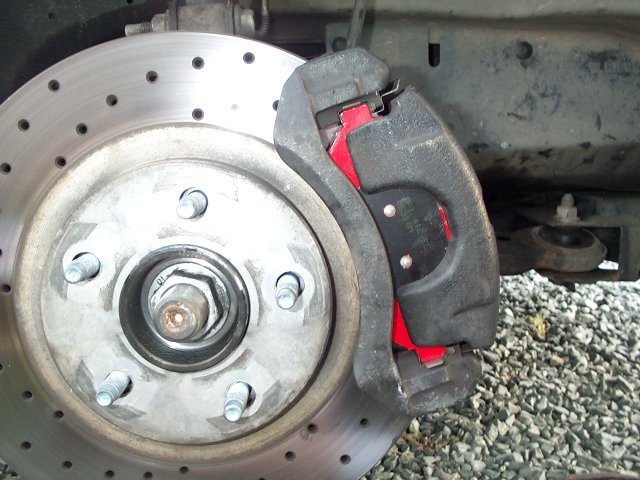
Brake pads naturally wear out over time. Luckily, it is not as difficult to replace them as you may think. The tools that you need for this project include a lug wrench, c-clamp, adjustable or open wrench, Allen wrenches, hammer, and a bungee cord. When you jack up your car, make sure that you have it supported by blocks or jack stands. It is never safe to work on a car that is supported by a jack only. The first thing you need to do is remove the wheel. The lugs should be easy to take out, it is best to do so from the bottom up.

Next, in order to remove the brake pads you must first remove the brake caliper. The brake caliper can be located just above the lug bolts, sitting on top of the brake disc. There is a bolt that keeps the caliper in place. You can remove it easily using the suitable wrench. There are different types of bolts that could be keeping it in place, so it is a good idea to have different wrenches handy. Now you can pull the caliper off by pulling directly up. You may need to wiggle it a bit in order to loosen it. Now you can sit the caliper some place convenient, or use your bungee cord to tie it up.
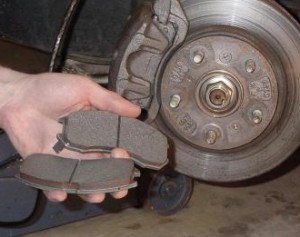
Now comes the time to remove the brake pads. They should actually slide right out without giving you any trouble. Remember how they are attached though, because you will need to know this when you are installing the fresh ones. If you are driving an older vehicle, you may need to tap them with your hammer a bit to get them unstuck. There may be some small metal tabs keeping the pads in place as well. If so, make sure you hang onto them; you will need them when you put the new pads in.
Now you can easily slide your new brake pads in, using the metal tabs to keep them in place if applicable. Now with your new pads affixed, you should adjust the brake piston. This piece of equipment adjusts as your pads wear out in order to keep your brakes working efficiently. To readjust it, you need your c-clamp. Put the end of the clamp with the screw against the piston. The other end should rest behind the caliper assembly. Now just slowly tighten the clamp until the piston has moved to a point where you can insert the pads easily.
The next thing you need to do is slide the caliper assembly over your new pads. Replace the bolts. At this point, it is a good idea to push down the brake petal a few times so that you may be assured of your brake pressure. Now you can replace the wheel and the lug nuts. It is a good idea to make sure that the lug nuts are truly secure. At this point you have successfully changed the brake pads on your car.

Sunday

Free Tips on How to Start A Hot Engine

Although usually engines exposed to cold weather is the most known problem related to car starting difficulties, hot engines might bring obstacles as well. Many people realize that the car do not start as easily as it should when the engine is hot and do not know what to do about it. In order to be able to overcome this problem, it is important to start by learning why it happens.
Most of the reasons by which a hot engine would be hard to start are based on problems related to the fuel. When the engine is too hot, fuel can't circulate properly due to the way in which vapor obstructs it and therefore the engine wouldn't start as easily as it should or it wouldn't start at all.
A car engine would keep on gaining temperature until a while after it was shut off. During this period of time is when the highest amount of vapor would be circulating around and therefore that is when the chances it obstructs the engine are bigger as well. This way, if you are driving in hot weather and you have just turned off the car in which you experience start problems, you should wait for a few minutes until starting it back.
Fuel injected engines do not experience this problem as much as others do due to the fact that the fuel remains inside the injectors by being under a very high pressure. This way, fuel injected engines would not become so easily obtruded by vapors as other engines would and therefore the car would not have the same problems to start as another would.
Also, engines might become hard to start while being hot if it coincides with the season in which refiners change from a fuel blend to another. Sometimes gasoline refiners change from a higher volatility fuel to a lower one when summer approaches due to the way in which hot weather causes fuel to evaporate easier. If refiners change back to a higher volatility fuel while the engine is still exposed to days of high temperatures, this could cause the fuel to evaporate too much creating too much vapor and therefore obtruding the engine.

Jakob Jelling

Free Tips to on How to Start A Cold Engine

Starting a car with a cold engine can be very difficult sometimes and it can become a real obstacle for those who live surrounded by extremely cold weathers. This way, for all those who might experience this problem it is not only important to learn how to overcome it but also why it happens in order to be able to prevent it as much as possible as well.
Cold engines might experience problems at the time to start due to different reasons. One of these reasons can be based on the effect which cold has on liquids evaporation. When it is cold, gasoline evaporates less and this cause it to be more difficult to burn due to the fact that it is burnt when it is evaporated.
Another reason by which a cold engine might have problems to start is caused by the fact that oil becomes much thicker in cold than the way it is in hot. Oil, like any other liquid changes its consistency when it is exposed to very low temperatures as well as it changes back when it is in a very hot weather, and this might cause oil to have problems at the time of circulating in the car engine.
Besides the engine, car batteries might experience problems while being in cold weathers as well and this could affect the engine. Batteries function through chemical reactions which loose agility while being cold and therefore, in such circumstances, batteries don't function properly. When this happens, the car energy becomes affected and this causes problems for the engine start.
If these three problems happen together, starting an engine might become a really hard task to achieve. In order to overcome the lack of gasoline evaporation problem, you can spray ether into the engine which would evaporate quickly and help the engine start. Besides this, you can also to prevent having oil too thick which wouldn't circulate properly by using thin synthetic oils. You should also try to maintain the car isolated from cold as much as possible, but by using the two last mentioned methods you would experience much less problems at the time of staring the car in cold weather.

Free Tips on How to Recondition a Battery

If you're like most of us, you know how much of an expense and inconvenience a dead battery can be. By the time you pay for a tow truck to come and boost or replace your battery, plus any lost earnings that you may have incurred, you can see that the costs quickly add up. And while being able to recondition a dead battery may not solve your immediate problems, it can definitely eliminate the expense of buying a new battery. Plus, if you're so inclined, you can turn it into a very profitable business. And the best part is that it's very easy and inexpensive.
Automotive lead-acid batteries generate electricity by using lead plates surrounded by sulfuric acid. Along with electricity, this double sulfate reaction also produces lead sulfate.
Normally in a healthy battery, the lead sulfate is converted back to lead and sulfuric acid when it is recharged. But in an older battery, or one that's been discharged for a long period of time, the lead sulfate changes to a crystalline form. It then coats the lead plates of the battery and reduces the capacity of the battery. This process is known as sulfation, and is a normal occurrence in lead-acid batteries. It's also one of the most common reasons that these batteries fail.
When sulfation happens, it causes a host of problems within the battery. It's responsible for lowered capacity, longer recharge times, higher working temperatures, and increased corrosion.
The good news is that sulfation can often times be reversed. A specialized battery charger that pulses a high current through the battery is often used. This allows the crystalline lead sulfate to be broken down and turned back into lead and sulfuric acid, thus cleaning the lead plates and regaining charge capacity.
So before you throw that battery away, you should look into battery reconditioning as a way to save it. And if you're interested, you can also earn a substantial amount of money by reconditioning free dead batteries, and then reselling them. A very small investment for a very large return!

John R Thompson

Friday

Free Tips on How To Get That Bad Smell Out Of Your Vehicle

Keeping up with our daily responsibilities and chores can be quite the task. It usually involves work, cleaning and time. Things that we don't like to do very much. However, it is important that we keep up with all of our chores and responsibilities. For example keeping our vehicle clean is important. If we do not keep our vehicles clean we can run into more problems. One problem that you may encounter from not keeping your vehicle clean is that a bad smell may appear in your vehicle. So, what can you do to try to get rid of a bad smell?
You should start by taking all the trash out of your vehicle, also take out anything that does not belong there. A smell may be being caused by an old bag of food, smelly clothes, or anything else that may have been forgotten in your vehicle. It may take a little time, but once the bag is gone the smell will eventually leave also.
Next you should vacuum your vehicles mats, carpets and seats. This will help remove any smells that may be being caused by something on them.


You can try to put an air freshener of some sort in your vehicle.
Sometimes this will help, and sometimes it will only cover it for a short time. Also make sure to choose an air freshener that is mild. An air freshener that is too strong may be just as bad as the bad smell. You can also try products like febreze and oust to help get rid of any smells.
If the smell is coming from a stain in your carpets or upholstery you should clean the stain to the best of your ability with a stain removing cleaner that is meant for upholstery. Make sure you do a test spot in a unnoticeable spot first. If spot cleaning the stain does not work you may want to get your carpets steam cleaned or steam clean them yourself. This should really lift the stains and smell out.
After you have tried all of these options, you can also let your vehicle simply "air out". Leave your windows down or the doors open so that fresh clean air is breezing through and carrying the bad smell away. It is not a fast process, but it usually works.
If you do not want to deal with or you are having trouble getting the smell out there is another option. You can get your vehicle professionally detailed. A professional auto detailer will clean your vehicle from the inside out. They have the tools and products to not only get your vehicle looking great but also smelling great. They should be able to get rid of any smells you may have and any other concerns you have for your vehicle. Getting your vehicle detailed professionally will not take long.
You don't have to live with the bad smells in your vehicle anymore, a professional auto detailer help your vehicle look and smell great!

Wednesday

Free Tips on How to Check Tire pressure To Get Better Fuel Efficiency

One of the easiest ways to improve the gas mileage for your car is checking the tire pressure in all four tires. Simply doing this routine tire maintenance can save fuel and increase the life of your tires. A government study concluded that by correctly maintaining your tires is like getting 2 “free” tanks of gas a year. With today’s fuel prices that could easily be $140! You will also increase the life of your tires and could save at least one new set of tires during the life of your car. Now that I have you convinced of the value of good tire pressure, let’s discuss the basics.


First you will need to purchase an inexpensive tire pressure gauge. These are easy to find and easy to use. Buy a good one (They don’t cost that much) and put it in your glove box. The next big question is “How much air do my tires need?” You will need to find out what the manufacturer’s recommended pressure is for your vehicle. You can find this information in a couple of places. First you can look in your owner’s manual or check the information placard glued on the inside edge of the doors. Remember, the tire pressure on the side of the tire is the maximum pressure for that particular tire. This is different from the manufacturer’s recommended pressure. Now you are ready to check the pressure in your tires.

The best time to check your pressure is when your tires are cold. The car should have been sitting for at least three hours or have been driven for less than 2 miles. If your tires are hot, then the air is hot and the pressure will read higher than normal. This is why using the manufacturer’s recommended tire pressure is so important. If you use the maximum tire pressure printed on the tire and then drive out on the road, the pressure will increase because of the heat. This can be potentially unsafe. If they are low, take a quick trip to the neighborhood gas station. There you can add a few pounds of air and recheck the pressure. One tip, don’t trust the gauge on the air compressor at the gas station. These are generally in bad shape and have been treated poorly. Use your new one you just purchased instead. Repeat this process every month. You will save gas and extend the life of your expensive tires.

Free Tips on Preparing Your Automobile For Long Term Storage.

If you are leaving town for an extended period of time or are storing a vehicle for seasonal use, there are several things you can do to protect your automobile and insure it will be ready for use when you retrieve it. Taking the time to prepare your car right will save you a lot of grief and money later on.
The first step is to find a suitable location for long term storage. This is critical. The location should be secure, dry and clean. Putting it in a dusty barn is probably one of the worst places for you car. Make sure the storage place is dry and free of moisture. Moisture, humidity and condensation are the biggest hazards to exterior, interior and engine. Rust and corrosion can form on exposed metal and mold and mildew can grow in the interior as well. The best place is a climate controlled storage facility. Just look under storage in the yellow pages and there should be some options for you.
Also, you will need to rodent proof your storage as well. Rats can destroy the wiring system. They can also get into the interior and build nests there. One option is to place rat poison or some other pest control device around the car. Ma If the storage unit has power to it, I would recommend getting a noise box that repels rats and mice. You can buy them at your local hardware store. These are very safe and will not hurt pets or children.
Once you have picked a suitable location, it is time to prepare your car.
Step one is to change the oil and replace it with a synthetic. Changing the oil before storage will reduce moisture in the system and help prevent corrosion in the engine. The reason for synthetic oil is because of the coating properties and it will not break down as quickly as conventional oil.
Now you will need to fill the gas tank completely full. Most people siphon out the gas and leave the tank empty. This is not correct and the moisture left in the empty tank will encourage rust. Fill the tank as high as you can and leave it. This will prevent moisture from forming and prevent rust accumulation. It is also prudent to add in a gas stabilizer as well.
The next step is the battery. If the vehicle is in for short term storage, you may want to hook up battery charger to the battery. This will insure all electrical equipment like stereo will have power and any saved settings will be there when you return. For longer periods of time, remove the battery. Batteries can crack and leak acid everywhere. In this case it is best to just remove it and replace it when you return.
The next area to prepare is the external weather stripping and tires. The best product to use for this is a lithium grease. Stay away from petroleum based products. They will eventually dry out and crack the rubber. To apply the grease, spray it on a rag first and then wipe it on the tires and weather stripping. Be sure to cover the gaskets in the doors
, sunroof and trunk.
For the interior, use a leather or vinyl conditioner. This will safeguard these surfaces from cracking and drying.
The last step is to thoroughly clean the exterior. After you have washed it, apply a coat of wax and buff it out. If you have an air buffer, this process will be a lot easier and will be more effective. Then cover the car with a good quality car cover. If you follow these basic steps, your expensive automobile should be in the same shape you left it before your journey.

Free Tips on The Mysterious "Check Engine" Light.

If you have had your car or SUV long enough, that annoying “check engine” light has probably made an appearance on your dash board. The first time I saw it, I popped the hood and “checked” the engine. It seemed ok to me. My car was running fine. So like most experienced car drivers, I ignored it or I tried too. The really insidious thing about that little innocent light is that it really gets to you after a while. After a long drive at night with that light shining at me like a laser beam, I considered putting it out its misery with my tire iron. Which brings up the question, what is it there for.

Well here is a basic answer. The “check engine” light is connected to the car's engine fuel management computer. This is the computer that runs the fuel injectors, reads the engine sensors, etc. The oxygen sensors are used by the ECM to determine how accurately it's injecting the fuel, and adjusting the way the fuel is injected to compensate for changing conditions. When the computer inside the ECM detects that there is something wrong, the ECM turns on the “check engine” light. For example, a bad sensor or engine operating parameter that exceeds a preprogrammed set point then the ECM turns on the light to let you, the driver, know that something is wrong and needs to be corrected. It doesn’t mean something cataclysmic is about to happen, just that the computer that runs a lot of the functions in your car is getting some bad information. Most of the time this means an oxygen sensor has failed and needs to be replaced. In a lot of states, your car will not pass the inspection when the light is on. So you have to fix it before you can get a new inspection sticker.